
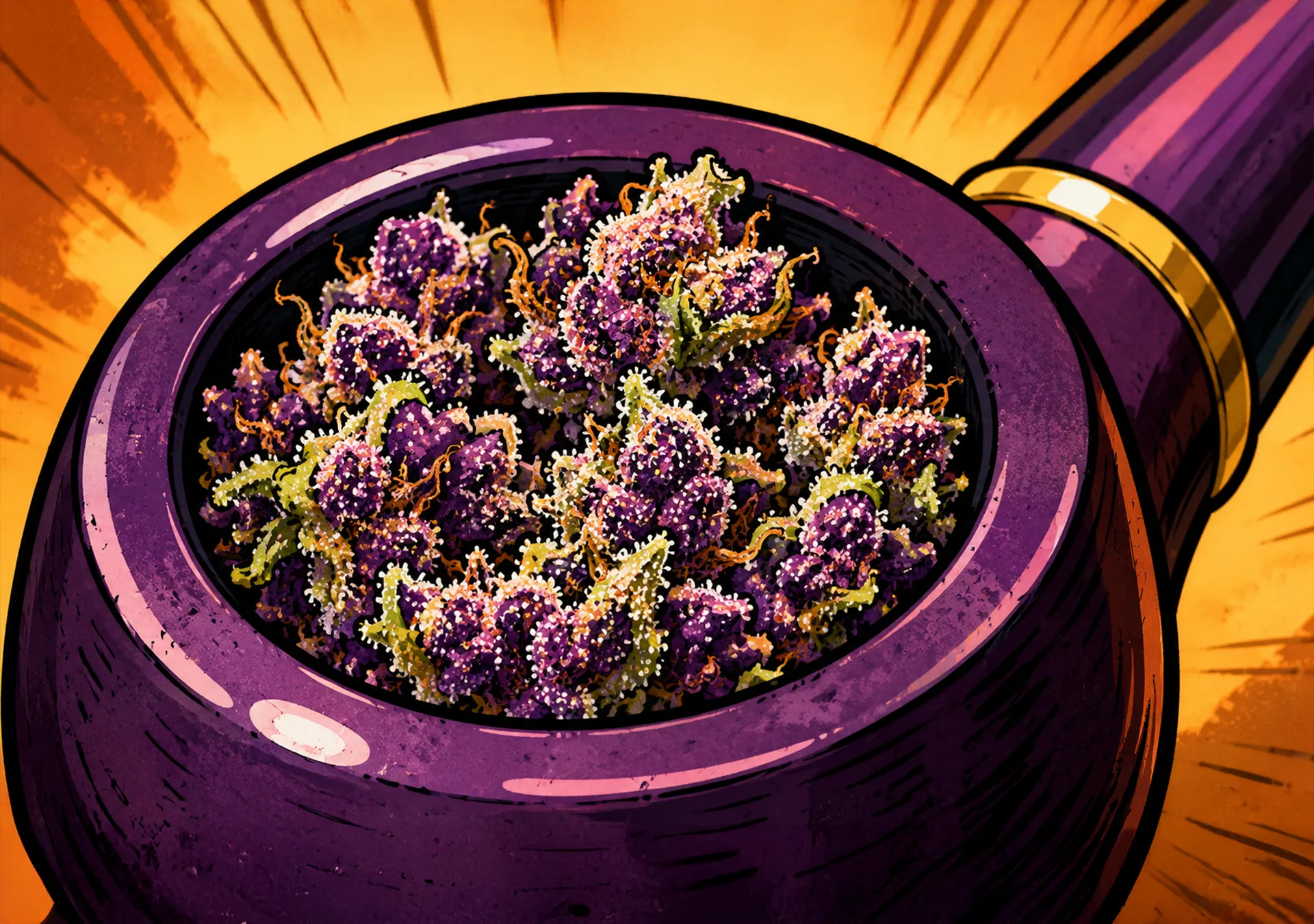
What Makes Cannabis Turn Purple? The Science Behind the Color
Purple cannabis has an unfair advantage on a dispensary shelf.
Before anyone smells it, checks the package date, studies the trichomes, or asks about the genetics, the color has already made an impression. Deep violet flower can look rare, exotic, and almost too carefully designed to have grown from a plant.
But purple cannabis is not painted, dyed, or created by THC.
Its color comes primarily from plant pigments called anthocyanins. Genetics determine whether a cannabis plant has the potential to produce those pigments, while temperature, maturity, light, and other growing conditions influence how strongly that potential appears.
The result can range from a few lavender streaks to flower so dark it looks nearly black.
For beginners, the important part is understanding what that color can tell you—and what it cannot. Purple may reveal something about the plant’s genetics and growing environment, but it does not automatically mean the flower is stronger, better, more sedating, or more expensive to produce.
Sometimes purple cannabis is exceptional.
Sometimes it is simply purple.
Cannabis Contains More Than One Kind of Color
Most cannabis begins visually dominated by chlorophyll, the green pigment plants use during photosynthesis.
That green is not the plant’s only possible color. Cannabis tissues can also contain pigments from several other chemical families. Carotenoids contribute yellow and orange tones, while anthocyanins can create red, pink, violet, purple, and blue coloration across leaves, stems, petioles, and flowers.
Researchers analyzing differently colored cannabis tissues identified four anthocyanins, including derivatives of cyanidin and peonidin. Cyanidin-3-rutinoside—also called keracyanin—was the most abundant pigment detected in the samples and was strongly associated with red-to-purple cannabis tissue.
These pigments are separate from several other visible parts of the flower.
The orange or rust-colored “hairs” on a cannabis bud are pistils associated with the flower’s reproductive structure. The sparkling frost covering the surface comes from glandular trichomes, where much of the plant’s cannabinoids and terpenes are synthesized and stored. The purple coloration develops inside pigmented plant cells rather than functioning as a visible layer of THC.
That distinction immediately clears up one of the most common misconceptions:
A darker purple bud does not necessarily contain more THC than a green one.
Color and potency involve different parts of the plant’s chemistry.
What Are Anthocyanins?
Anthocyanins are members of the larger flavonoid family of plant compounds.
They are responsible for many of the red, purple, and blue colors found throughout the plant world. Blueberries, blackberries, purple cabbage, cherries, red grapes, and certain flowers all display anthocyanin-based pigmentation.
Inside plant cells, anthocyanins are generally stored within compartments called vacuoles. Their concentration, chemical structure, surrounding compounds, and the conditions inside those vacuoles influence how the final color appears. Research involving flower pigmentation has shown that changes in vacuolar acidity can shift anthocyanin color from redder tones toward purple or blue.
Cannabis uses the same general pigment system, although the exact anthocyanins, genes, tissues, and environmental responses can vary by plant.
Anthocyanins are not created for human aesthetics. In plants, these pigments are associated with several possible functions, including protection from excess light and ultraviolet exposure, responses to temperature and other environmental conditions, and antioxidant activity within plant tissue. Cannabis-specific research is still developing, but the pigment pathway itself is widespread throughout plant biology.
The fact that consumers find the color attractive is almost incidental.
The plant was using anthocyanins long before purple flower became a dispensary selling point.
Genetics Decide Whether a Plant Can Turn Purple
Temperature receives much of the attention in conversations about purple cannabis, but genetics come first.
A grower cannot take any random green cultivar, lower the temperature, and expect it to transform into deep violet flower. The plant needs the genetic machinery required to produce and accumulate visible amounts of anthocyanin in the relevant tissues.
Researchers studying multiple cannabis accessions grown at the same site found wide variation in pigmentation. Some plants developed red or purple petioles early in life. Others remained green until later stages. Certain plants produced purple leaves and flowers, while others displayed pigment only in limited areas.
Because the plants shared a growing location, those differences could not be explained by environment alone.
The genetic background influenced:
- Whether visible anthocyanins appeared
- Which plant tissues changed color
- How early the color developed
- How deeply the tissue became pigmented
- Which specific anthocyanins accumulated
This is why cultivars such as Purple Urkle, Granddaddy Purple, Grape Ape, and Purple Punch are more consistently associated with violet coloration than many unrelated strains.
Their names do not guarantee that every batch will appear equally purple. Different phenotypes, cultivation environments, harvest timing, and postharvest handling can still change the finished appearance.
The genetics simply make the color possible.
Temperature Can Bring the Color Forward
The familiar claim that “cold makes weed purple” contains some truth, but it is usually oversimplified.
Cooler temperatures can encourage anthocyanin accumulation in genetically capable plants. They may also make purple pigmentation more visually noticeable as the plant matures.
A 2025 controlled study examined a cannabis population with consistent purple-pigment potential across temperatures ranging from approximately 0.5°C to 22°C. The plants accumulated the most anthocyanins at 8°C and 15°C. Anthocyanin levels were lower at the extremely cold 0.5°C treatment and at the warmer 22°C treatment.
That result is important because it shows that the relationship is not simply:
Colder temperature equals more purple.
Moderately cool conditions supported the greatest pigmentation in that particular population. Extreme cold did not continue increasing anthocyanins.
The study also found that anthocyanin concentration, flower dry weight, and total CBD had different temperature responses. The conditions that maximized visible purple pigment were not automatically the same conditions that maximized cannabinoid concentration or plant yield.
Growers therefore need to balance appearance with plant health, development, yield, aroma, and cannabinoid production.
Producing the darkest possible flower is not always the same as producing the best possible flower.
Cool Nights Are a Trigger, Not a Paintbrush
In outdoor cultivation, purple coloration often becomes more noticeable as the season moves toward cooler autumn nights.
Indoor growers can create similar temperature changes by lowering nighttime conditions late in flowering. When the genetics are responsive, the cooler environment may activate or strengthen the pigment pathway.
The temperature does not add purple color from outside the plant.
It influences how the plant expresses genes and enzymes involved in anthocyanin production. The pigment is still created internally by the cannabis plant itself.
This is a useful difference for beginners to understand.
Cold does not turn green THC into purple THC. It does not coat the flower with a new substance. It changes the plant’s biological conditions, and a genetically capable plant may respond by producing or accumulating more visible anthocyanin.
Another cultivar exposed to the same temperatures may remain largely green.
That does not mean the grower did anything wrong. The two plants may simply carry different pigment potential.
Some Cannabis Turns Purple Without Cold
Cool temperatures can enhance pigmentation, but they are not always required.
Certain cannabis genotypes display purple stems, leaves, or flowers even under relatively warm and stable conditions. In cannabis research populations, some plants began developing visible pigment during early vegetative growth, while others expressed it much later.
This is sometimes described as genetic purple.
The plant’s anthocyanin pathway is naturally active enough that the color appears without a dramatic cold trigger. Temperature and other environmental factors may still alter the intensity, but they are not responsible for creating the trait from nothing.
Other cultivars are more environmentally responsive. They may stay green under warmer conditions and become increasingly purple as temperatures fall.
Most commercial purple flower reflects some combination of the two:
- Genetics provide the ability.
- Environment affects the final expression.
That is why the same named cultivar may look lavender from one producer and nearly black from another.
Even genetically identical clones can develop differently when cultivated under different temperatures, lighting, nutrition, and environmental management.
Why Purple Often Appears Late in Flowering
Some cannabis plants stay mostly green through early flowering and become purple closer to harvest.
Several processes can contribute.
Anthocyanin production may become more active as the plant matures. The pigment may also accumulate gradually until enough is present to become visible. Green chlorophyll can visually dominate the tissue earlier, while later pigmentation becomes easier to see as the plant progresses through its life cycle.
Cannabis researchers have observed genotype-specific differences in timing. Some plants expressed purple coloration during early development, while others developed it only near the end of the growing season. In certain accessions, leaves, stems, and inflorescences all became increasingly pigmented late in the cycle.
This explains why a plant can appear green in cultivation photographs and produce considerably more colorful flower by harvest.
It also explains why not every part of the flower changes evenly.
Purple may appear first around leaf edges, along the bracts, near the tips of calyxes, or on the small sugar leaves surrounding the flower. Other buds from the same plant may remain greener because of their position, development, or exposure to environmental conditions.
Cannabis is an agricultural product, not a manufactured color sample.
Variation is normal.
Does Light Affect Purple Cannabis?
Light participates in the regulation of anthocyanins throughout the plant world.
Pigment production can respond to light intensity, ultraviolet exposure, temperature, developmental stage, and stress signals. Cannabis researchers have identified regulatory genes associated with the anthocyanin pathway, but the exact interaction between light and purple flower remains less thoroughly studied than temperature.
This makes sweeping grow-room claims difficult to support.
Certain lighting conditions may help a genetically capable cultivar express stronger pigmentation. However, no single spectrum, ultraviolet treatment, or lighting trick can reliably turn every cannabis plant purple.
Light also affects far more than color. It influences photosynthesis, plant structure, flower development, trichomes, cannabinoids, and yield.
Changing it solely to chase visual pigmentation could create tradeoffs elsewhere.
The best cultivators do not treat purple as an isolated effect. They manage the complete plant and allow the color to emerge as part of a healthy expression of the genetics.
Can Nutrient Stress Make Cannabis Purple?
Stress can alter plant coloration, but not every red or purple cannabis leaf is desirable.
Nutrient deficiencies, damaged roots, temperature problems, and other environmental stresses can create discoloration in stems and leaves. Those symptoms should not automatically be confused with the stable purple flower associated with anthocyanin-rich genetics.
Controlled cannabis research involving individual nutrient deficiencies found that deprivation could cause major changes in foliage and substantially reduce growth and flower yield. Depending on the missing nutrient, floral yield declined by roughly one-third to more than two-thirds compared with properly nourished control plants.
That makes nutrient deprivation a poor strategy for creating marketable purple flower.
A stressed plant may show red, brown, yellow, or purple tissue because something is wrong. It may also produce smaller yields, damaged leaves, and lower-quality flower.
Healthy genetic coloration tends to look integrated into the flower rather than like random injury. The distinction can still require cultivation experience, particularly because natural pigment and stress symptoms may appear at the same time.
For consumers, the safest conclusion is simple:
Purple color is attractive, but it does not prove the plant was healthy.
The rest of the flower still needs to be evaluated.
Does pH Turn Cannabis Purple?
This myth usually begins with a true piece of plant chemistry.
Anthocyanin color is affected by acidity inside plant cells. Research in petunias and soybeans has shown that genes controlling vacuolar pH can shift flowers toward different red, purple, or blue tones.
The misunderstanding comes from turning that cellular process into a grow-room shortcut.
The pH that influences anthocyanin hue is the carefully regulated environment inside the plant’s pigment-containing vacuoles. It is not the same as simply pouring a more acidic or alkaline solution into the growing medium.
Changing root-zone pH aggressively can interfere with the plant’s ability to obtain nutrients and may create stress or deficiency. It does not allow a grower to select a flower color as though adjusting paint.
Genetics and cellular regulation still control the anthocyanin system.
Proper pH management supports a healthy plant. Deliberately forcing the plant outside an appropriate range is not a reliable way to manufacture purple buds.
Does Purple Cannabis Have More THC?
Purple color does not reveal THC percentage.
Anthocyanins are flavonoid pigments stored inside plant cells. Cannabinoids such as THCA and CBDA are produced and stored primarily in the glandular trichomes covering female cannabis flowers. These systems can influence the same visible bud, but they are chemically and biologically distinct.
The 2025 cannabis temperature study demonstrated that anthocyanin accumulation and total CBD did not share the same temperature optimum. A condition that created more purple pigmentation did not automatically maximize cannabinoid content.
The same caution should be applied to THC.
A dark purple flower may test very high, moderately, or comparatively low. A bright green flower may contain more THC than a purple one. The color cannot provide a laboratory result.
Commercial cannabis research has also found substantial chemical variation across flower products and imperfect relationships between familiar strain labels and measured cannabinoid or terpene profiles. Visual identity and naming are not substitutes for testing.
Consumers who want to understand potency should read the cannabinoid information on the package.
Consumers who want to understand the complete flower should look beyond potency as well.
Does Purple Mean Indica?
Purple cannabis is often marketed alongside words such as “indica,” “nighttime,” “relaxing,” or “heavy.”
That association is partly cultural.
Several famous purple cultivars have historically been described as indica-dominant, and consumers may connect their color with heavier evening effects. But anthocyanin pigmentation does not create sedation, and purple color does not scientifically classify a flower as indica.
Large-scale analysis of commercial cannabis found that the common labels “indica,” “hybrid,” and “sativa” did not consistently match the measured chemical diversity of the products. Samples carrying different labels frequently had overlapping terpene profiles.
Color adds even less certainty.
A plant can inherit purple pigmentation from one side of its genetic background while expressing a cannabinoid and terpene profile that does not match traditional expectations surrounding purple strains.
Beginners should therefore avoid choosing a product solely because purple flower “looks like an indica.”
Ask about the specific product, producer, batch, cannabinoids, aroma, and reported experience instead.
Does Purple Cannabis Taste Like Grapes?
Not necessarily.
Purple flower is often given names and packaging built around grapes, berries, wine, or candy. Some cultivars genuinely express sweet, fruity, or floral aromas that fit those descriptions.
The anthocyanins are not what create the grape flavor.
Cannabis aroma comes primarily from volatile compounds such as terpenes and other aromatic chemicals. The flower’s pigment and aroma may share a genetic background, but one does not automatically cause the other.
This means purple cannabis can smell like:
- Grapes or berries
- Earth and spice
- Fuel
- Pine
- Citrus
- Floral perfume
- Sweet cream
- Almost anything else its genetics express
A green cultivar can also smell intensely like grapes.
Color influences expectation, and expectation can shape the way people describe flavor. The nose provides better information than the eyes.
Is Purple Cannabis Better Quality?
Purple can be part of exceptional cannabis, but it is not a quality grade.
Color may indicate interesting genetics, successful pigment expression, or careful cultivation. It can also make flower more visually desirable and distinctive.
It cannot tell you whether the flower was:
- Harvested at the right time
- Dried slowly and evenly
- Properly cured
- Stored away from heat and light
- Packaged recently
- Trimmed carefully
- Preserved with the right moisture
- Tested accurately
- Worth its price
A purple bud can still be dry, stale, harsh, poorly trimmed, weak in aroma, or damaged by storage.
A green bud can be one of the best products on the shelf.
The same rule applies here as it does with frostiness. A single visual characteristic can provide useful information, but quality is cumulative.
Our guides to how cannabis quality is evaluated before it reaches store shelves and what makes some flower look frostier than others explore the additional factors that shape the finished product.
Why Some Purple Flower Looks Almost Black
Very dark cannabis usually contains a high concentration of anthocyanins layered over the plant’s underlying green and other pigments.
The flower is not truly black.
In ordinary lighting, deep violet, red, blue, and green tones can combine into a surface that appears nearly black. Dense flower structure, heavy shadow, trichome coverage, and photography can deepen the effect further.
Different parts of the bud may reveal the actual color when viewed under brighter light. Pulling the flower apart may expose greener interior tissue, lavender bracts, dark sugar leaves, or reddish-purple edges.
Photography can exaggerate the darkness.
High contrast, cool lighting, dark backgrounds, and image editing can transform a naturally purple flower into something that looks almost ink-black online. The product may appear lighter under normal dispensary or home lighting.
That does not necessarily make the photograph dishonest.
It means color depends partly on how light reaches and reflects from the flower.
Can Purple Color Fade After Harvest?
The appearance of cannabis can continue changing after the plant is cut.
Anthocyanins are influenced by temperature, light, oxygen, moisture, and cellular conditions. Chlorophyll and other plant compounds also change during drying, curing, and storage.
A newly harvested flower may therefore look different after several weeks in a package.
Proper postharvest handling should protect the flower’s general appearance, aroma, trichomes, and moisture. Excessive heat, direct sunlight, and long storage can gradually make colors look duller or browner.
Color preservation is only one part of the concern.
The same conditions that affect pigmentation can also reduce aroma, dry the flower, and accelerate the degradation of other compounds. Our article on what happens when cannabis gets too hot explains why a car, windowsill, or warm storage area is especially damaging.
Purple flower should be stored the same way as any other quality cannabis:
Sealed, upright, away from direct light, and in a cool, stable environment.
How Beginners Should Evaluate Purple Flower
Enjoy the color. Just do not stop there.
Start With the Genetics
Ask which cultivar it is and who grew it. Some genetics are known for stable purple expression, while others change more dramatically depending on the environment.
Check the Package Date
Bright color can remain after freshness begins declining. The packaging date provides useful context for aroma, moisture, and expected shelf life.
Look at the Actual Flower
Notice whether the purple appears across the developed flower or mainly on leftover sugar leaves. Look for healthy structure, intact trichomes, and a trim appropriate to the product’s price.
Smell It
Aroma often reveals more about the experience than color. The flower should smell expressive rather than like hay, cardboard, excessive moisture, or nothing at all.
Read the Cannabinoid Information
Do not estimate potency from darkness. Use the tested batch information and begin conservatively if you are unfamiliar with the product.
Consider the Whole Experience
Color, aroma, cure, moisture, genetics, freshness, smoothness, and personal preference all belong in the evaluation.
The best-looking flower is not always the one you will enjoy most.
Purple Is a Trait, Not a Verdict
Purple cannabis exists because the plant is capable of producing anthocyanin pigments.
Genetics determine whether that pathway can create visible color. Temperature and other environmental conditions influence how strongly it is expressed. Maturity affects when the color appears. Cellular chemistry shapes whether the pigment looks red, violet, purple, or nearly blue.
None of those processes automatically determines THC percentage, effects, aroma, freshness, or quality.
That does not make purple meaningless.
It is a visible expression of plant biology, one shaped by breeding, cultivation, environment, and time. When paired with strong aroma, healthy trichomes, careful curing, and proper freshness, it can be part of a genuinely impressive flower.
At Tropicanna, purple cannabis is evaluated the same way as every other flower on our menu. We consider the producer, genetics, batch quality, aroma, cure, testing, packaging, freshness, and value, not color alone.
The purple may be what catches your eye.
Everything else determines whether the flower is worth bringing home.